















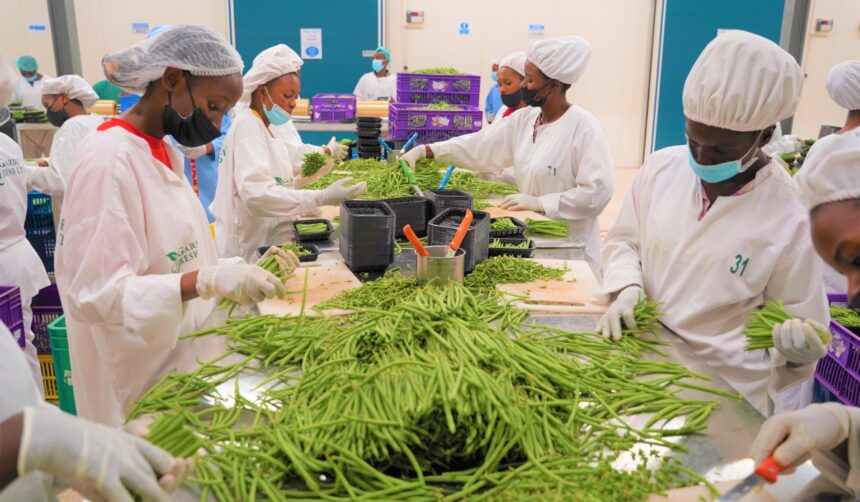
Rwanda Exports Face Big Decline
The Rwanda exports reduced 12.5% in the second quarter of 2025, according to the National Institute of Statistics of Rwanda (NISR). The total value of goods sent abroad reached $1.73 billion, showing a 13% decrease compared to the first quarter of 2025.
Imports also went down to $1.24 billion, while re-exports — goods imported and later sent abroad — stood at $142.41 million.
You can read more about Rwanda’s trade updates directly from NISR official reports.
Comparison With Previous Years
NISR data shows that all Rwanda exports dropped by 35.6% compared to Q2 of 2024, when exports had reached $537.64 million.
When compared with Q1 of 2025, exports reduced by 28%. On the other hand, imports decreased by 20.5% compared to Q2 of 2024, and by 9.55% compared to Q1 of 2025.
Decline in Re-Exports
Re-exports, which are goods imported to Rwanda and then exported again, also recorded a decline. They dropped by 13.1% compared to Q2 of 2024, although they showed a 5.1% increase compared to Q1 of 2025.
This indicates that Rwanda is still active in regional trade but facing challenges in global demand and competitiveness.
Main Trade Partners
The top five countries that received Rwanda’s exports were:
-
United Arab Emirates (UAE)
- Democratic Republic of Congo (DRC)
- China
- Belgium
- Luxembourg
For re-exports, the main destinations were DRC, Ethiopia, UAE, Burundi, and Germany.
Notably, the DRC received 94.5% of all re-exports, worth about $54.56 million. The key items were food products, live animals, and petroleum-related goods.
Rwanda’s Main Import Sources
On the import side, Rwanda’s biggest suppliers were:
- China
- Tanzania
- India
- Kenya
- United Arab Emirates
This shows Rwanda’s reliance on Asian and East African economies for goods and services.
What This Means for Rwanda’s Economy
The decline in Rwanda exports reduced 12.5% raises concern for the economy. Lower exports can mean less foreign exchange earnings, which can affect growth, employment, and development projects.
Economists say Rwanda must continue diversifying its economy, supporting local industries, and promoting Made-in-Rwanda products to remain competitive.
For more details on trade dynamics in Africa, check African Development Bank insights.